
International protection in Poland - breaking down the difference between refugee status and subsidiary protection.
International protection is a legally established term that ensures the right to legally stay in Poland for a foreigner whose life or health is at risk in their home country.
01What types of international protection exist?
Status uchodźcy (Refugee status) - can be granted to a foreigner if they face persecution in their home country.
However, the "persecution" must meet certain legal criteria.
Ochrona uzupełniająca (Subsidiary protection) - is granted if your case does not meet the criteria, but there is a real threat to life, health, and safety, which applies to the majority of Ukrainians in current circumstances.
What is the difference?
By obtaining Status uchodźcy, a foreigner receives a "refugee passport" (Geneva passport) and a Karta pobytu for 3 years.
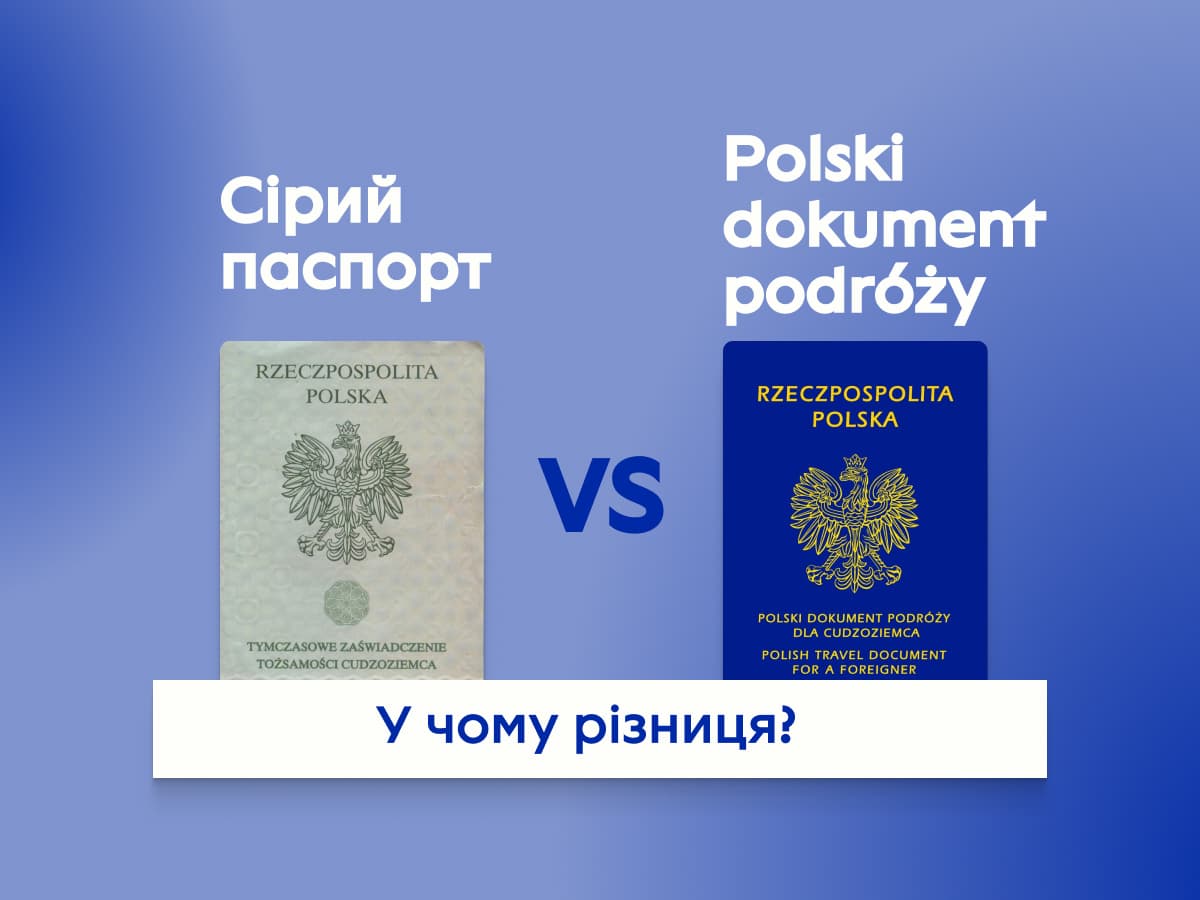
On the other hand, based on subsidiary protection, a foreigner receives a Karta pobytu for 2 years and a "Grey passport", which is issued while the case is being processed.
Pay attention!
The "Grey passport" is only a temporary ID document that does not confirm citizenship and does not authorize border crossing.
However, individuals with this type of international protection will later have the opportunity to obtain another Polish document that can replace a passport - Polski dokument podróży.
What is it and what are its features? Find out in this article on our website.
Useful material:
Polski dokument podróży VS Grey passport? Main advantages of Polski dokument podróży!